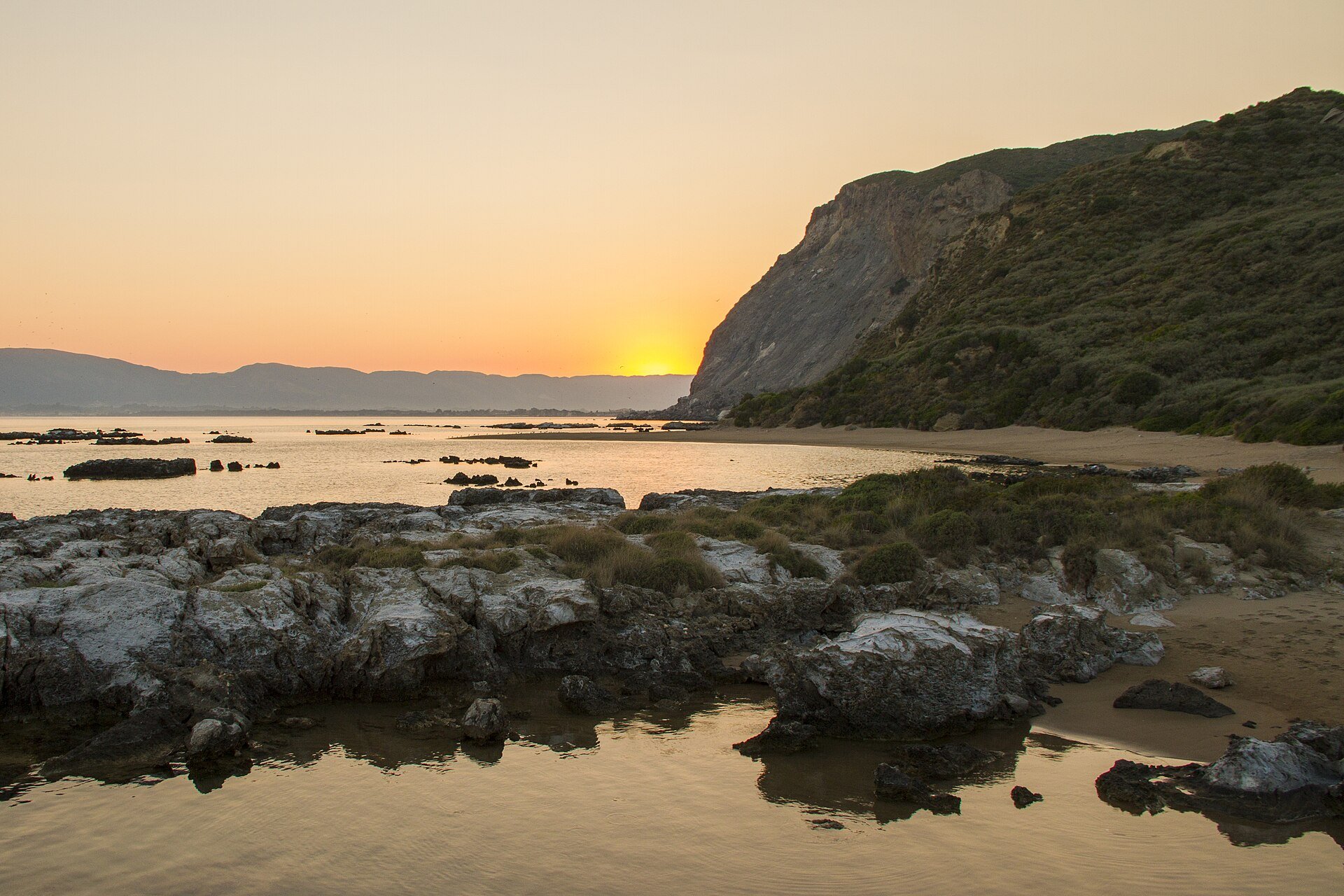
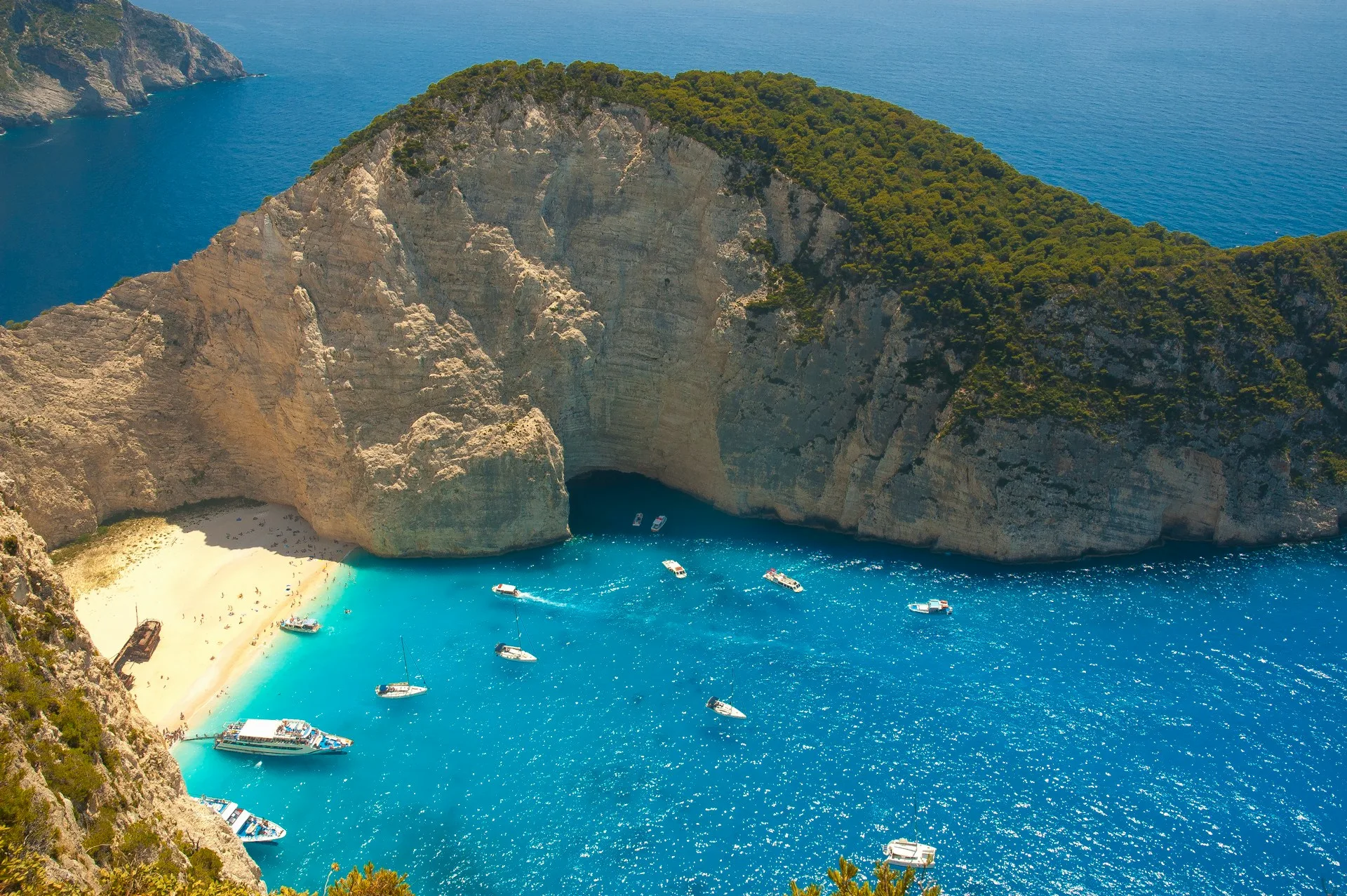
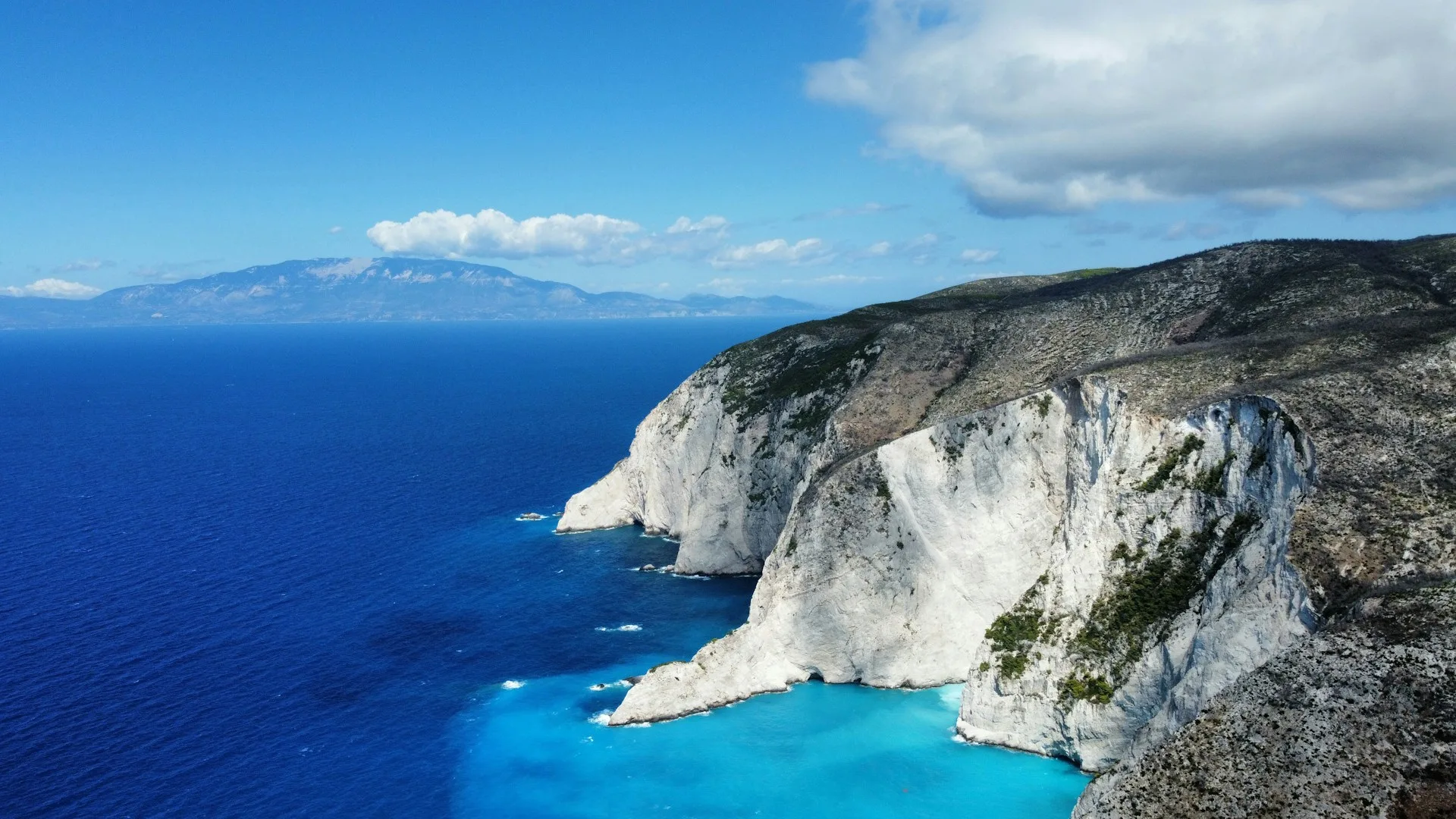
The sea caves at the northern end are best explored with a mask and snorkel at low tide — visibility can hit 20+ metres.
Makris Gialos — The Quiet Cave Beach of the North
There’s a reason most tourists never find Makris Gialos: the road there demands respect, and the beach itself offers nothing in the way of luxury. But for those willing to make the effort, the reward is one of Zakynthos’ most pristine corners — a small pebble cove fringed by sea caves and bathed in water so clear it almost looks artificial.
What Awaits You
Makris Gialos is a compact pebble-and-gravel beach set into the cliffs of the island’s northwestern coast, roughly 24 kilometres from Zakynthos Town. The beach is small — maybe 100 metres of shoreline — but the setting is spectacular. Pale limestone cliffs rise on either side, and at the northern end, a series of sea caves invite exploration. Bring a mask: underwater, the cave floors shimmer with light reflections and the rock formations are extraordinary.
The water is phenomenally clear. On a calm summer morning, you can see the bottom at 8 metres like it’s just below your hand. There are no sunbeds for rent — just a handful of flat pebbles and whatever shade the cliffs provide. A small taverna operates nearby in peak season, but don’t rely on it. Self-catering is the smarter plan.
Getting There
From Zakynthos Town, take the main road north toward Volimes. From the village of Anafonitria, follow signs for Navagio (Shipwreck Beach) and then branch off westward toward the coast. The last stretch of road is narrow and unpaved in parts — a small hatchback can manage in dry conditions, but a higher-clearance vehicle is more comfortable. Allow around 45 minutes from Zakynthos Town.
Insider Tips
The caves are the main attraction — swim into them with a snorkel on a calm day and you’ll understand immediately why people return here year after year. The water inside is impossibly blue.
Come before 10 AM in July and August. The beach fills up fast once people figure out it exists, and by noon the shade from the cliffs has shifted. Mornings are when the water is glass-calm and the light inside the caves is at its best.
Best Time to Visit
May and June offer the best combination of good weather, calm seas, and minimal crowds. July and August get busy — not busy by Tsilivi standards, but busy enough that you’ll be sharing pebbles. September is arguably the best month: warm water, emptier beach, dramatic autumn light.
What to Bring
No facilities guaranteed. Pack water, food, snorkel gear, and reef shoes — the pebbles are comfortable enough, but the entry into the water near the caves involves some slippery rock. A picnic on a deserted pebble beach surrounded by limestone cliffs is one of those quintessential Greek experiences that travel brochures can’t quite capture.