Sea Kayaking at Keri Caves — Into the Cliffs by Paddle
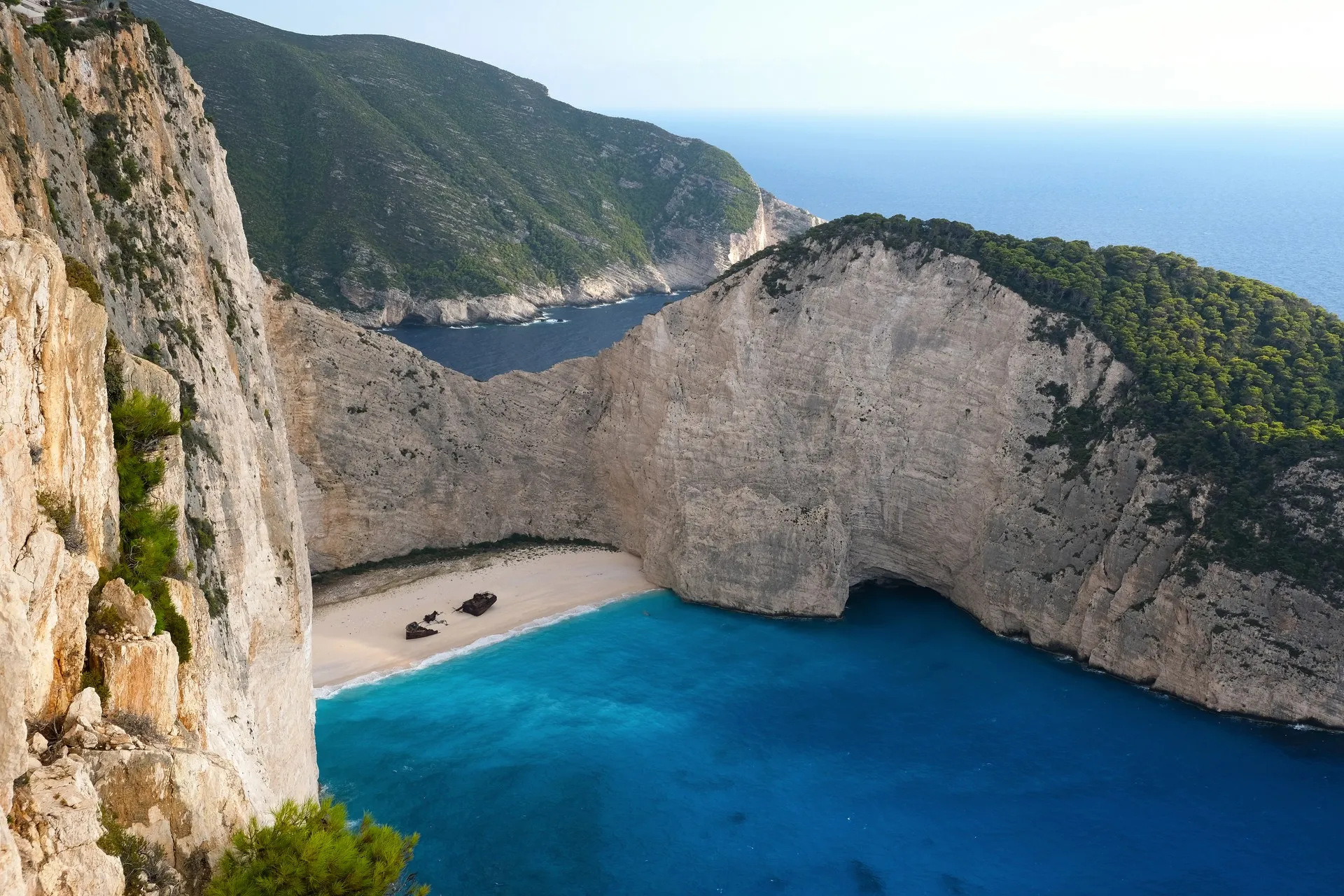
The western coast of Zakynthos is a wall. The Ionian hits the island’s limestone edge from the west and has spent millennia carving it into something extraordinary: caves, arches, sea stacks, tunnels through headlands, chambers large enough to hold a house. Most of this coastline is inaccessible by foot and impassable for large boats. A sea kayak, though, fits perfectly.
The Keri cave system in the island’s southwest is the finest kayaking destination on Zakynthos and one of the best in all of Greece. You’ll paddle through formations that have no names on tourist maps, enter chambers where the only sounds are the echo of your paddle and the surge of water on rock, and emerge from the far side of sea arches with a view that rewards the effort of getting there.
The Route
All guided tours begin from Keri Beach, a small shingle-and-sand cove below the village of Keri, reachable by a steep road from the village above. From here, guided groups paddle south and west along the base of Cape Keri’s cliffs.
The standard guided route (3–4 hours, ~8 km) passes through:
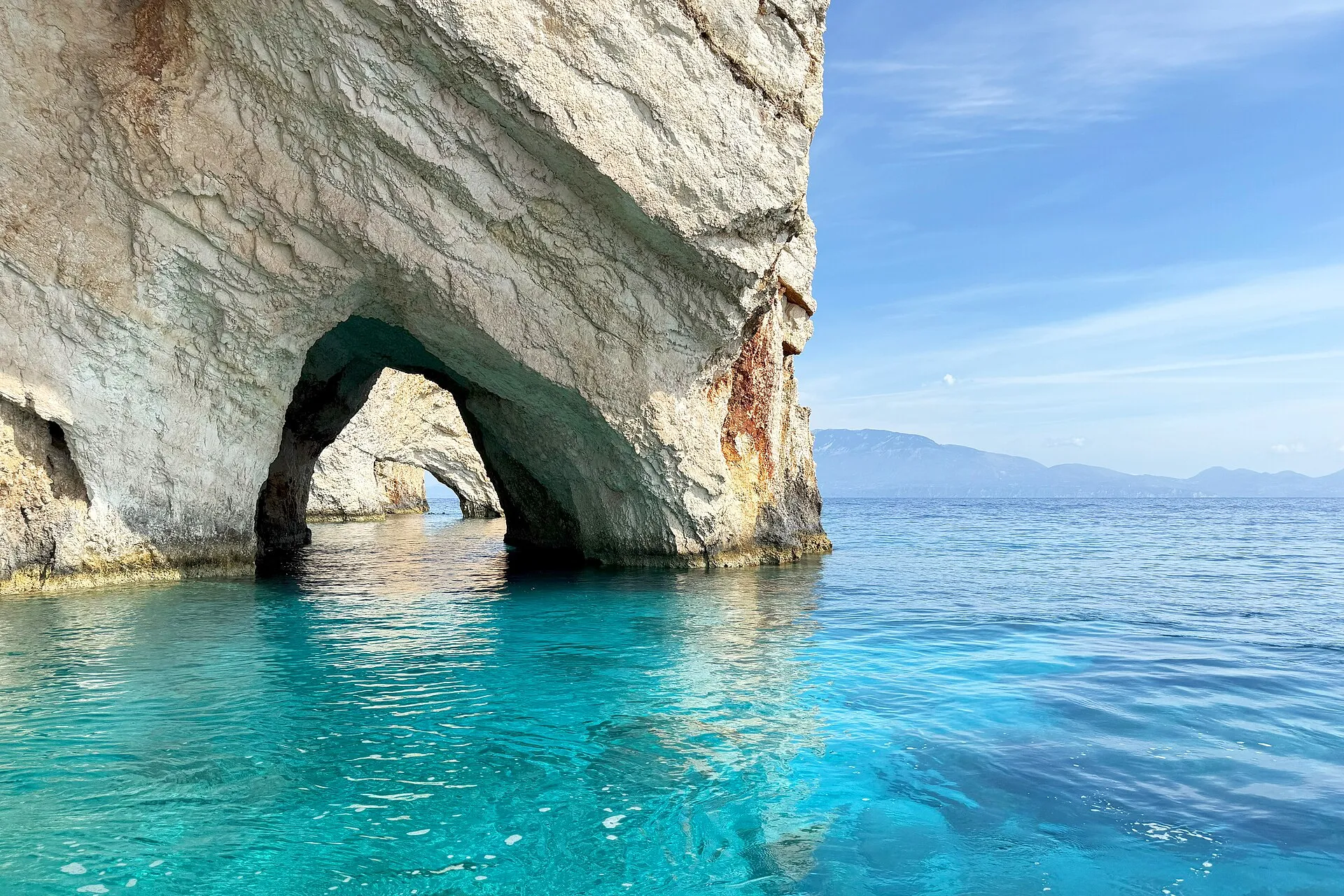
The Twin Arches — two natural stone arches separated by a rock pillar, where the kayak route passes through the nearer arch and around the pillar. The water in the arch tunnel glows turquoise from reflected light.
The Cathedral Cave — a large chamber accessible through a low entrance that requires lying flat on your kayak deck. Inside, the cave opens to roughly 15 metres height, with the sea floor visible 4–5 metres below. Limestone formations cover the ceiling. Sound carries strangely here.
The Smuggler’s Tunnel — a through-passage in the headland, about 30 metres long, wide enough for a kayak with room to spare. Exiting on the far side opens onto an exposed bay with views toward the Keri lighthouse.
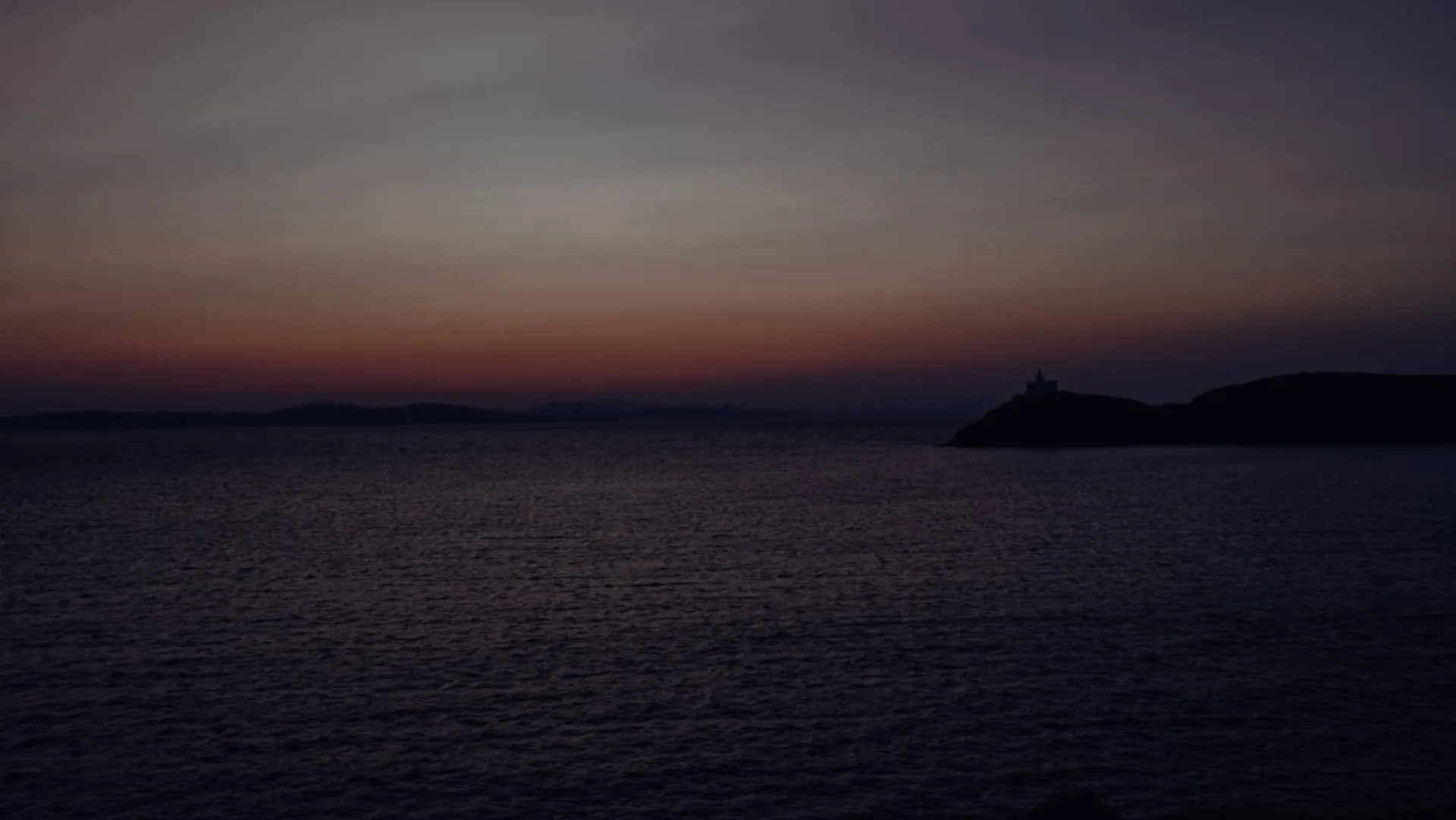
Keri Lighthouse Point — the southwesternmost point of Zakynthos. The lighthouse sits on the clifftop above; from sea level, the cliffs rise nearly vertical for 90+ metres. On calm days, guides stop here for swimming.
Guided vs. Independent
Most visitors take a guided tour, and for good reasons: the route requires some navigation through cave entrances that are not obvious from the water, sea conditions can change, and local operators know which caves are accessible on a given day (some entrances become dangerous if the swell is even moderate).
Experienced sea kayakers with their own equipment can paddle the route independently. The launch point at Keri Beach has a small shingle area to put in. Charts are available from the Zakynthos harbour master’s office. Assess swell conditions before departing — the cape is exposed to the west, and a 1-metre swell that looks manageable from the beach becomes disorienting inside a cave.
What to Bring
Guided tours provide all equipment (kayak, paddle, buoyancy aid, dry bag). Bring:
- Swimwear and a towel (swimming stops are almost always included)
- Reef shoes or sandals with heel strap
- Sun protection: hat, long-sleeve rash guard, sunscreen
- 1.5 litres of water minimum
- Action camera mount for your paddle — the POV from inside the caves is remarkable
Booking
Several operators run Keri kayaking tours from April through October. Book in advance in July–August; shoulder months (April–May, September–October) rarely need more than a day’s notice. Look for operators who cap group size at 8–10 paddlers — larger groups can’t safely enter the smaller cave systems.